
💧
1. Pure Water Only
Use distilled water, rainwater, or reverse osmosis water. Standard tap water is full of minerals that will burn their sensitive roots and kill the plant. Keep the pot sitting in a shallow tray filled with 1–2 inches of water.
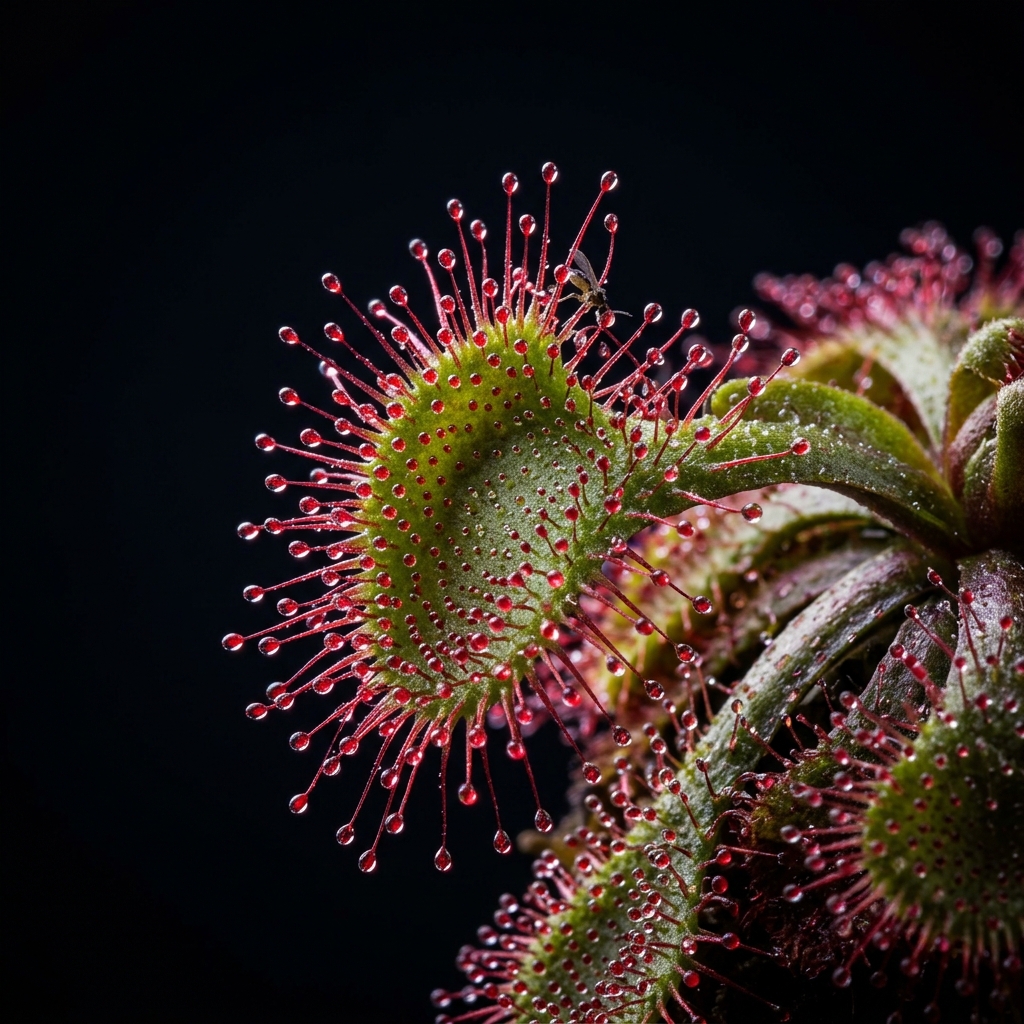
Carnivorous plants live in nutrient-poor bogs. Mineral salts and chlorine in standard tap water will burn their sensitive roots.
Botanical Care
Carnivorous plants are not difficult; they are simply different. By matching their natural bog conditions—mineral-free water, intense sun, and seasonal rest—you can keep them thriving for years.
The Basics
Use distilled water, rainwater, or reverse osmosis water. Standard tap water is full of minerals that will burn their sensitive roots and kill the plant. Keep the pot sitting in a shallow tray filled with 1–2 inches of water.
These are sun-worshippers. They want 6+ hours of direct, unfiltered sunlight daily. Outdoors on a patio or deck is best. If growing indoors, you must use a strong LED grow light positioned 6–10 inches above the plant.
Never use standard potting soil or fertilizer. It will instantly burn their roots. Grow them in a mix of 50% peat moss and 50% perlite. They catch their own food; bugs are their fertilizer.
Winter Rest
Venus Flytraps and Sarracenia Pitcher Plants require a 3–4 month winter rest (dormancy) to survive long-term. Select your winter climate below to get your custom dormancy protocol.
Best for USDA Zones 6–7 (Mid-Atlantic, Pacific Northwest, parts of the Midwest)
Leave plants outdoors through the first few light frosts in October/November.
In late November, move the pots into an unheated garage, shed, or a cold frame.
The plants need the cold (below 50°F) but must be protected from freezing winter winds that dry out the soil.
Since they are sleeping, they do not need sunlight. Check them once a week to ensure the soil remains damp.
Move them back outdoors into full sun in March.
Annual Cycle
A visual roadmap of how temperate carnivorous plants transition through the seasons.
Daylight shortens. Traps turn black and die off, and pitchers stop producing nectar. This is the plant preparing to sleep. Do not worry—it is completely healthy.
The plant is in a deep sleep. Growth stops entirely. The rhizome (bulb) under the soil is storing energy for the spring.
Temperatures rise and days lengthen. The plant wakes up and will often send up a flower stalk followed by rapid trap growth.
Peak growing season. Traps are fully active, colorful, and catching insects. Growth is rapid.
First 7 days
Plants traveling in dark boxes need a gentle transition to adjust to their new home.